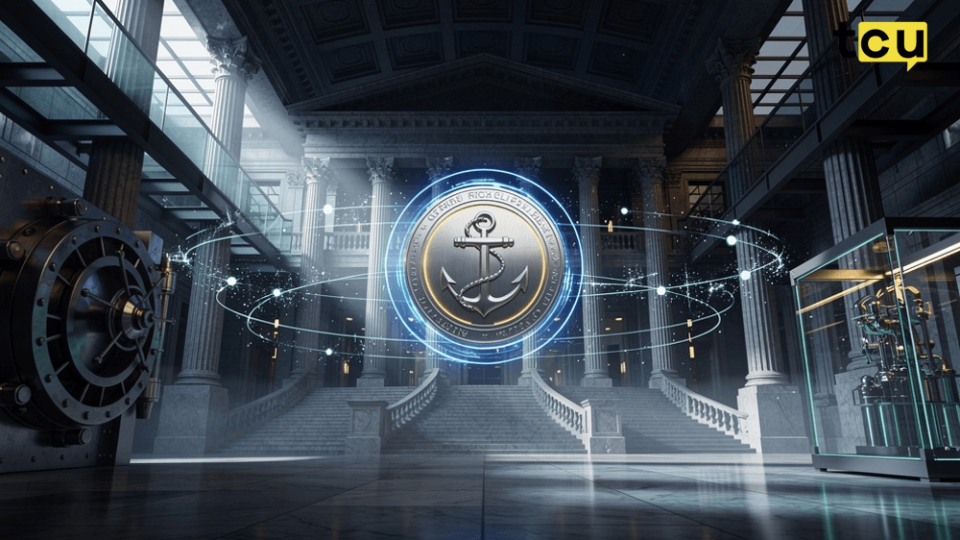

U.S. Bank has finished the first live pilot of its USBDC stablecoin, moving real money between its U.S. and European branches on the public Stellar (XLM) blockchain. The test matters because the bank did not build a private network for the exercise. It used open rails, and the money still moved. That may sound simple, but large banks have spent years arguing that public chains are too risky for regulated capital.
A live pilot on public rails
The bank says the platform is plugged into its internal risk management system. Jamie Walker, head of digital assets at U.S. Bank, framed that integration as the reason the pilot could happen. Major banks often avoid open networks because of regulatory concerns. U.S. Bank tried to solve that problem with technology rather than by hiding behind a closed system.
Controls built into USBDC
USBDC includes freezing and clawback functions. If a payment goes to the wrong address, or if financial intelligence authorities flag it, the bank can freeze or return the funds with a single click. That design keeps the token closer to traditional bank controls, even though it runs on a public chain. It also shows how banks may adopt public blockchains without giving up the compliance tools they rely on.
Stellar Development Foundation CEO Denelle Dixon called the launch a major precedent. She said the live pilot is a clear example of real institutional adoption, with regulated financial institutions using Stellar’s speed and open architecture for cross-border settlement.
Why Stellar got the nod
Stellar was chosen partly because the infrastructure was already there. RWA.xyz data shows the network holds about $3.32 billion in real-world assets. Retail users may know Stellar through USDC, which has around 685,000 holders. U.S. Bank is taking a different route, one closer to funds such as Spiko and Figure’s YLDS token. This is a format that is not for everyone. The system will have only a handful of wallets owned by the bank’s own divisions, but billions of dollars in transactions could flow through them.
U.S. Bank CEO Gunjan Kedia confirmed the pilot was successful. She said the technology will let the bank move capital between continents around the clock at almost no cost, bypassing traditional intermediaries and long interbank reconciliations. At first, USBDC will stay a closed instrument for the bank’s internal settlements and treasury operations.
Competition and limits
For now, U.S. Bank looks ahead of some peers. A group of roughly two dozen major banks, including Goldman Sachs, has promised a shared interbank token by 2027. U.S. Bank, the fifth-largest U.S. bank, has already tested a working solution on a public blockchain. The pilot is small in wallet count, but its implications for cross-border bank payments are harder to ignore.