

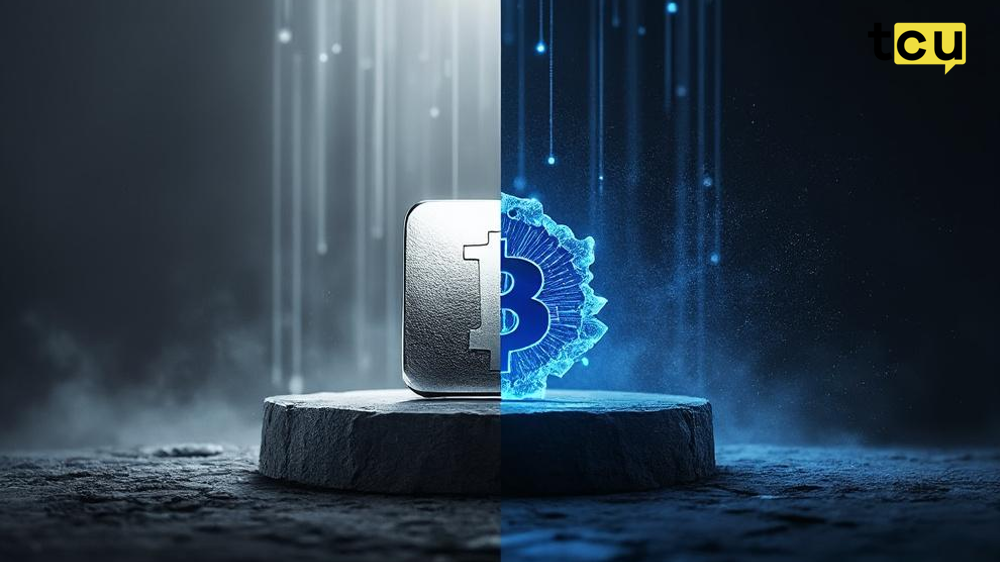

Silver’s remarkable surge to all-time highs
Silver hit $101 today, marking a fresh all-time high that’s been building momentum for months. The rally accelerated sharply in January 2026, and interestingly, silver has now surpassed gold as the best-performing asset in the current macro environment.
But here’s the thing that caught my attention: Bitcoin hasn’t followed the same trajectory. At least not yet. This divergence raises a pretty important question for crypto markets—what does silver’s breakout actually say about where Bitcoin might head next?
Why silver is moving so strongly
Silver’s rally isn’t just speculative frenzy. It reflects something deeper—a broader shift in how global capital is positioning itself amid rising uncertainty. Over the past few months, and especially in January, investors have been moving increasingly into defensive assets.
There are a few key drivers here. First, markets are pricing in multiple Federal Reserve rate cuts later in 2026. That expectation has pushed real yields lower and weakened the US dollar. For precious metals, this creates a powerful tailwind. Silver doesn’t yield interest, so lower real rates reduce the opportunity cost of holding it. Plus, a weaker dollar makes dollar-denominated metals cheaper for international buyers.
Second, silver faces real supply constraints. The market has been in a structural deficit for several consecutive years. Most silver production comes as a by-product of mining other metals, which limits supply flexibility. The US recently designated silver as a critical mineral, prompting strategic stockpiling and tighter inventories. As demand rose, available supply just couldn’t keep pace.
Third, silver’s industrial role has become increasingly important. It’s critical for solar panels, electric vehicles, power grids, data centers, and advanced electronics. This industrial utility makes silver both a safe haven and a strategic commodity, strengthening its appeal in a world focused on energy security.
Bitcoin’s lagging response
Despite sharing some of these macro tailwinds, Bitcoin has lagged silver’s move. That gap isn’t unusual—it’s historically consistent. While Bitcoin is increasingly viewed as “digital gold,” markets still classify it differently during periods of stress.
When uncertainty rises, capital first flows into traditional safe havens like gold and silver. Bitcoin often consolidates as investors reduce risk exposure. Historically, Bitcoin tends to move later, once fear turns into concerns about currency debasement and liquidity expansion. January 2026 appears to be firmly in phase one of that cycle.
What this means for Bitcoin’s next move
Silver’s breakout is still meaningful for Bitcoin—just not immediately bullish. If Bitcoin were to react only to the same forces driving silver, we’d expect it to lag. This is because capital flows choose safety first.
But here’s an interesting pattern: historically, silver’s sustained strength has often preceded Bitcoin rallies—not coincided with them. If silver continues to attract defensive capital, then the narrative typically shifts from risk avoidance to monetary debasement protection. That’s where Bitcoin has historically performed best.
In previous cycles, Bitcoin has followed gold and silver with a lag of weeks to months, once liquidity expectations replace immediate fear. The correlation between Bitcoin and silver has been noticeable, with Bitcoin following silver’s moves but with a slight lag on the macro level.
For Bitcoin to turn decisively bullish based on silver’s signal, we’d need to see either a shift in market psychology from pure safety to monetary protection, or clearer signals about future liquidity expansion. Silver’s all-time high suggests these conditions may be forming, but they’re not fully priced into Bitcoin yet.
Again, historically, gold and silver absorb the first wave of defensive capital. Bitcoin tends to follow later, once fear evolves into concerns about currency debasement and liquidity expansion. So silver’s record high may not mark Bitcoin’s immediate breakout, but it could be quietly setting the stage for it. The timing, as always, remains uncertain, but the pattern seems consistent with what we’ve seen before.