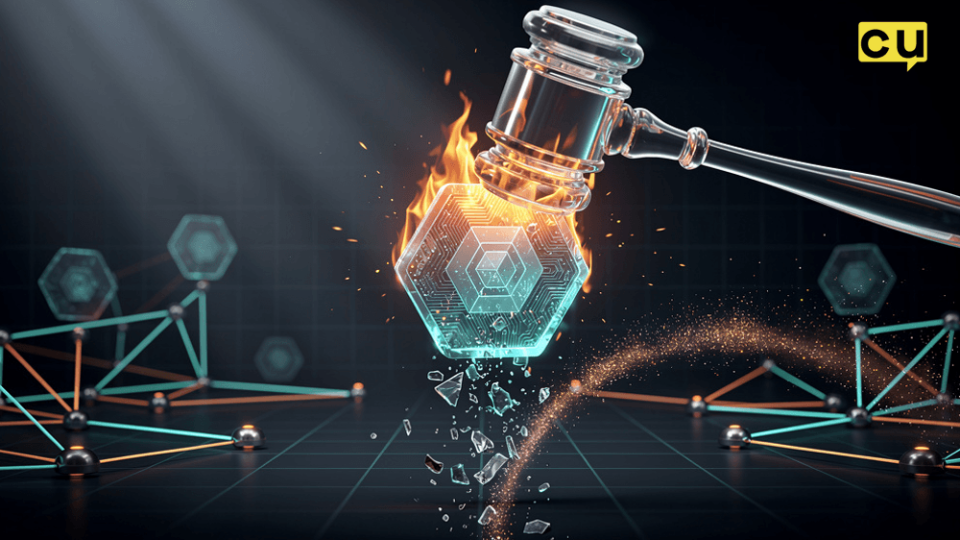

The Injective burn auction has run every week since December 2021, and it works in a fairly direct way. Each round takes a portion of the fees earned by applications on the network, bundles them into a basket, and lets people bid for that basket using INJ. The winning bid is then destroyed. Not held, not returned. Burned. There is no burn unless real network activity generates the fees first.
What Happens in the Burn Auction
The auction is built into Injective’s exchange and auction modules as an onchain, first-price bidding event. The first round back in December 2021 wiped out 40,000 INJ, and the pattern has not changed much since. More trading and building on the network leads to more fees, and more fees lead to a larger basket. The actual value of the basket depends on what apps generated that week.
The Bidding Process and the Arbitrage Angle
Every round follows the same path, and because it happens onchain anyone can verify the details. Bidders compete in INJ, and the highest bid captures the basket. Sometimes the winner gets a basket worth more than the bid, which creates an arbitrage opportunity. That gap helps keep participation active. It is not a guaranteed profit, though. The chance depends on how accurately people value the basket and how many others are bidding.
How the Mechanism Has Changed Over Time
The auction is not static. Injective has upgraded it several times as the network grew, including through INJ 2.0 and INJ 3.0. Then in November 2025, governance proposal IIP-617 passed with 99.96 percent approval and introduced the Community BuyBack. That runs monthly and works separately from the weekly auction. Users commit INJ, receive a pro-rata share of network revenue, and the committed INJ is burned. Injective calls this the Supply Squeeze mechanism, which ties the monthly burn to the weekly auction so the two scale together with network revenue.
By mid-2026, cumulative burns from both programs had reached roughly 7.19 million INJ. The August 2026 buyback round alone targeted more than 33,000 INJ. Crypto analyst @nazarr_0x noted around August 16, 2026, that Community BuyBack participants had earned average returns above 20 percent, calling it one of the more overlooked parts of INJ tokenomics.
What It Means for INJ Holders
The burn mechanism matters because it reduces circulating supply based on usage, not on a fixed schedule. As of August 26, 2026, INJ traded near $5.52, and circulating supply sat close to the 100 million total supply cap, based on Coingecko data. That makes the burn a slower but visible force. It is not the kind of event that moves the price overnight, but it connects network activity directly to token supply. For holders, the weekly auction and monthly buyback are two connected, usage-driven ways that supply gets taken out of circulation.