


The comparison between Coinbase and Binance for Indian users centers on regulatory compliance rather than features, as both platforms face significant restrictions in India due to non-compliance with local cryptocurrency regulations and PMLA requirements.
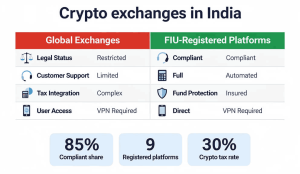
India’s crypto market reached $6.5 billion in transaction volume in 2024, with regulated platforms capturing 85% of market share (RBI Report, 2024). This shift reflects growing regulatory enforcement that has fundamentally changed how Indian users access global cryptocurrency exchanges.
Both Coinbase and Binance, despite being global leaders, face substantial restrictions in India. Understanding these limitations is crucial before making any platform choice. The regulatory landscape has evolved rapidly, making compliance the primary factor in platform selection.
Key Takeaways
- Binance was fined ₹18.82 crore by FIU-India in 2024 for operating without proper registration
- Coinbase suspended buy/sell services for Indian users in April 2023 due to regulatory challenges
- Using Binance in India violates PMLA regulations and carries legal risks
- FIU-registered local exchanges offer safer alternatives for Indian cryptocurrency trading
- India’s 30% crypto tax and 1% TDS push users toward compliant platforms
- VPN usage to access banned platforms violates terms of service and local laws
- Nine cryptocurrency exchanges have obtained FIU registration as of 2024
- Local platforms like CoinDCX and WazirX provide better regulatory compliance
What’s New in 2026
The regulatory framework has tightened significantly since 2024. India’s implementation of 30% tax on crypto gains and 1% TDS has pushed 85% of trading volume to compliant platforms. Global exchanges continue seeking FIU registration, but progress remains limited.
Binance applied for FIU registration after paying substantial fines, while Coinbase has shown no clear timeline for resuming full Indian operations. The government’s focus on PMLA compliance has created a clear divide between legal and illegal cryptocurrency trading options.
Regulatory Status and Legal Compliance
The regulatory environment forms the foundation of any platform comparison in India.
1. Binance Legal Challenges
Binance faces severe regulatory restrictions in India. The Financial Intelligence Unit (FIU-India) issued a show-cause notice in 2023 for operating without proper registration under the Prevention of Money Laundering Act (PMLA).
The platform was subsequently fined ₹18.82 crore in 2024 before applying for registration. Despite this application, Binance remains largely inaccessible to Indian users without VPN usage, which violates both platform terms and local regulations.
Using VPN to access Binance exposes Indian users to legal penalties under PMLA and potential account closure without recourse.
2. Coinbase Service Suspension
Coinbase took a different approach by voluntarily suspending services. The company ceased buy/sell operations and wallet services for Indian users in April 2023, citing regulatory challenges.
While the Coinbase app remains downloadable in India, trading functionality is restricted. The company has not provided a timeline for resuming full operations, focusing instead on regulatory clarity.
This suspension, though disruptive for users, demonstrates a more cautious approach to regulatory compliance compared to continued unauthorized operations.
3. FIU Registration Requirements
Nine cryptocurrency exchanges have successfully registered with FIU-India as of 2024. These platforms operate legally and provide compliant cryptocurrency trading services.
Registered exchanges must implement know-your-customer (KYC) procedures, report suspicious transactions, and maintain detailed transaction records. This regulatory framework ensures user protection and legal compliance.
Feature Comparison Analysis
Comparing features becomes secondary when considering legal accessibility, but understanding platform capabilities provides context for future decisions.
1. Trading Features and Assets
| Feature | Binance | Coinbase |
|---|---|---|
| Supported Cryptocurrencies | 600+ | 250+ |
| Spot Trading Fees | 0.1% | Up to 0.6% |
| Leverage Trading | Up to 125x | Limited |
| India Legal Status | Restricted | Suspended |
| Mobile App Access | VPN Required | Limited |
| Customer Support | Limited for India | Suspended |
2. Security and Insurance
Binance offers comprehensive security features including two-factor authentication, cold storage, and insurance funds. However, these protections become irrelevant for Indian users accessing the platform through unauthorized means.
Coinbase provides FDIC insurance for USD deposits and robust security measures. The platform maintains strong institutional-grade custody services, though these benefits are currently unavailable to Indian users.
Both platforms have experienced security incidents historically, but their current security frameworks are considered industry-standard.
3. User Experience and Interface
Binance provides advanced trading interfaces suitable for experienced traders, with comprehensive charting tools and order types. The platform’s complexity can overwhelm beginners but offers powerful features for active traders.
Coinbase focuses on user-friendly design, making cryptocurrency trading accessible to newcomers. The simplified interface reduces learning curve but may lack advanced features required by professional traders.
How to Choose a Cryptocurrency Platform in India
Given the regulatory restrictions, Indian users should follow a structured approach to platform selection.
Step 1: Verify FIU Registration
Check the Financial Intelligence Unit’s official list of registered cryptocurrency exchanges. Only platforms with valid registration operate legally in India.
Step 2: Assess Security Features
Evaluate two-factor authentication, cold storage practices, and insurance coverage. Registered platforms typically maintain higher security standards due to regulatory requirements.
Step 3: Compare Fees and Features
Analyze trading fees, supported cryptocurrencies, and additional services. Consider your trading frequency and preferred assets when making comparisons.
Step 4: Review Customer Support
Ensure the platform provides adequate customer support in Indian time zones and languages. Local platforms often offer superior support for Indian users.
Step 5: Consider Tax Compliance
Choose platforms that facilitate tax reporting and comply with India’s 1% TDS requirements. This simplifies annual tax filing and ensures regulatory compliance.
Alternative Platforms for Indian Users
Several FIU-registered exchanges provide legal alternatives to Binance and Coinbase.
1. CoinDCX
CoinDCX operates as India’s largest registered cryptocurrency exchange, offering over 200 cryptocurrencies. The platform provides competitive fees, advanced trading features, and comprehensive customer support.
The exchange maintains strong security practices and complies with all Indian regulations. Crypto vs Stock Market analysis shows CoinDCX users benefit from integrated portfolio management tools.
2. WazirX
WazirX offers user-friendly cryptocurrency trading with support for major digital assets. The platform focuses on Indian market needs and provides rupee-based trading pairs.
Regulatory compliance and local customer support make WazirX suitable for beginners and experienced traders alike.
3. ZebPay
ZebPay provides secure cryptocurrency trading with emphasis on regulatory compliance and user education. The platform offers systematic investment plans (SIP) for cryptocurrency investing.
Strong KYC procedures and transaction monitoring ensure compliance with Indian anti-money laundering requirements.
Use Cases and Trading Scenarios
Different user types require different platform features and regulatory considerations.
1. Beginner Cryptocurrency Investors
New investors benefit from platforms offering educational resources, simple interfaces, and comprehensive customer support. FIU-registered exchanges typically provide better beginner guidance and local language support.
Regulatory compliance ensures beginners avoid legal complications while learning cryptocurrency trading fundamentals.
2. Active Day Traders
Active traders require low fees, advanced charting tools, and high liquidity. While Binance traditionally offered these features, Bitcoin Vs the Ethereum trading strategies now require compliant platforms for Indian users.
Local exchanges increasingly offer advanced trading features while maintaining regulatory compliance.
3. Long-term Investment Strategies
Long-term investors prioritize security, regulatory compliance, and tax reporting features. Using registered platforms ensures investments remain legally protected and tax-compliant.
Cold storage options and systematic investment plans support long-term wealth building strategies within legal frameworks.
4. Institutional Trading
Institutional investors require comprehensive compliance, audit trails, and regulatory reporting. Only FIU-registered platforms can provide the necessary legal framework for institutional cryptocurrency trading in India.
Advanced custody solutions and compliance reporting support institutional investment requirements.
Risks and Legal Considerations
Understanding legal risks is crucial when evaluating cryptocurrency platforms in India.
Legal Risks:
- Using non-registered platforms violates PMLA regulations
- VPN usage for accessing banned platforms breaches terms of service
- Unreported cryptocurrency transactions face penalties and prosecution
- Funds on non-compliant platforms lack legal protection
Tax Implications:
- 30% tax applies to all cryptocurrency gains regardless of platform
- 1% TDS requires compliant platform integration
- Non-compliant platforms complicate tax reporting and compliance
- Penalties apply for unreported cryptocurrency income
Security Risks:
- Unauthorized platform access increases security vulnerabilities
- Limited recourse for funds lost on non-compliant platforms
- Reduced customer protection compared to regulated alternatives
Pros and Cons
Evaluating both global and local options provides comprehensive perspective.
Global Platforms (Binance/Coinbase) Pros:
- Extensive cryptocurrency selection and advanced features
- High liquidity and competitive fees for international users
- Established reputation and global user base
- Advanced trading tools and institutional services
Global Platforms Cons:
- Legal restrictions and regulatory non-compliance in India
- Limited or suspended customer support for Indian users
- Risk of account closure and fund freezing
- Complex tax reporting due to offshore status
Local Registered Platforms Pros:
- Full regulatory compliance and legal operation
- Dedicated Indian customer support and localized features
- Simplified tax reporting and TDS compliance
- Legal protection for user funds and disputes
Local Registered Platforms Cons:
- Smaller cryptocurrency selection compared to global platforms
- Higher fees on some trading pairs
- Limited advanced trading features
- Lower overall liquidity for some assets
Future Outlook for 2026
The regulatory environment continues evolving, with potential implications for platform availability and compliance requirements.
India’s focus on cryptocurrency regulation through PMLA compliance and tax enforcement will likely intensify. Global exchanges seeking market entry must obtain proper registration and comply with local requirements.
Binance and Coinbase may eventually resume full Indian operations if they achieve regulatory compliance. However, the timeline remains uncertain, and users cannot rely on future availability for current trading needs.
Local exchanges will likely expand features and cryptocurrency offerings to compete with global platforms while maintaining regulatory compliance. This evolution benefits Indian users seeking advanced features within legal frameworks.
Conclusion
For Indian users in 2026, neither Coinbase nor Binance currently provides a viable legal option for cryptocurrency trading. Binance faces significant regulatory restrictions and legal risks, while Coinbase has suspended operations indefinitely.
The choice becomes clear when prioritizing legal compliance and user protection. FIU-registered exchanges like CoinDCX, WazirX, and ZebPay offer safer alternatives that comply with Indian regulations while providing comprehensive cryptocurrency trading features.
Rather than risking legal penalties and fund security on non-compliant platforms, Indian users should choose registered exchanges that operate transparently within the regulatory framework. This approach ensures long-term access to cryptocurrency trading while maintaining legal compliance and user protection.
FAQ
1. Which is better Coinbase or Binance in India?
Neither Coinbase nor Binance is currently the best choice for Indian users due to regulatory restrictions. Coinbase suspended services in 2023, while Binance faces legal restrictions and fines from FIU-India. Local exchanges like CoinDCX or WazirX are recommended instead as they comply with Indian laws.
2. Which crypto platform is best in India?
Platforms like CoinDCX, WazirX, and ZebPay are among the best in India as they are FIU-registered and comply with PMLA regulations. These platforms offer legal cryptocurrency trading, proper customer support, and simplified tax compliance, unlike global exchanges facing restrictions.
3. Is Coinbase allowed in India?
No, Coinbase is not fully operational in India. The platform suspended buy/sell and wallet services in April 2023 due to regulatory challenges. While the app remains downloadable, trading functionality is restricted, and users face limitations on withdrawals and deposits.
4. Is it legal to use Binance in India?
No, using Binance is not legal in India. The platform was fined ₹18.82 crore by FIU-India for operating without registration under PMLA. Indian users accessing Binance through VPN risk penalties under money laundering regulations and potential account closure.
5. What are the risks of using non-registered crypto exchanges in India?
Using non-registered exchanges violates PMLA regulations and exposes users to legal penalties, account freezing, and fund loss. These platforms offer no legal protection, complicate tax reporting, and may result in prosecution. Users should only trade on FIU-registered platforms to ensure legal compliance and fund security.