
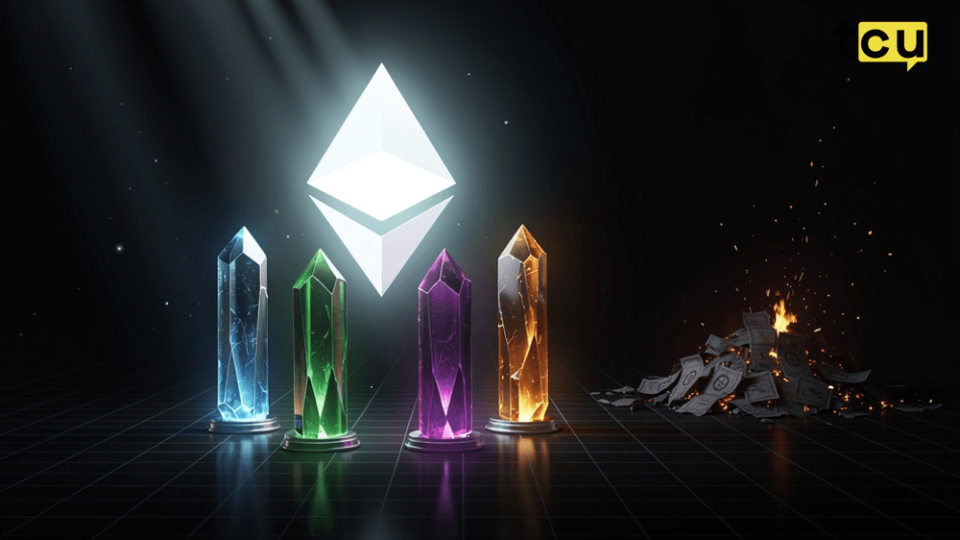

Vitalik Buterin is pushing a different way to think about ether. The Ethereum co-founder says the asset should not be valued mainly through the burning of transaction fees. In his view, ETH needs a broader case as a long-term store of value, one tied to how the network works and what it protects.
That matters because Ethereum’s recent economic story leaned heavily on fee burns. After EIP-1559 in 2021, part of each transaction fee was destroyed. When network activity was high, more ETH could be removed than newly issued, and the supply sometimes fell. This became known as ultrasound money. It was a simple pitch, perhaps too simple.
Fee burns lose force as fees fall
The problem is that fees have dropped. Scaling tools made transactions cheaper. The median fee was around 35 cents in January and reportedly fell to 3.5 cents in October, while daily transaction volume rose by more than 50%. Cheap transactions are good for users. They also mean less ETH is burned and less revenue flows to the network. That weakens the old deflation story.
Buterin now points to what he calls CROPS: resistance to censorship and hijacking, open source code, privacy, and security. He argues these features should carry Ethereum’s value case. They are harder to measure than a fee chart, I think, but they may matter more over time. In an economy shaped by artificial intelligence, censorship resistance and privacy could become practical needs rather than abstract ideals.
A messaging shift, not a policy change
None of this means Ethereum will change its monetary policy right away. Buterin’s comments look more like a strategic guide for how ETH should be explained to investors. The old fee-burn story was easy to sell in a busy market. It is less convincing when activity is cheap and burn revenue is thin.
Bitcoin supporters have criticized the shift, arguing that ETH still lacks a fixed supply story. Some in the Ethereum community see it differently. They say a clearer and more durable narrative is needed, even if it is less flashy.
The debate is really about what gives ETH value. Is it scarcity created by burns, or is it the network’s ability to resist control and protect users? Buterin is clearly leaning toward the second answer. Whether investors follow him is another question.