
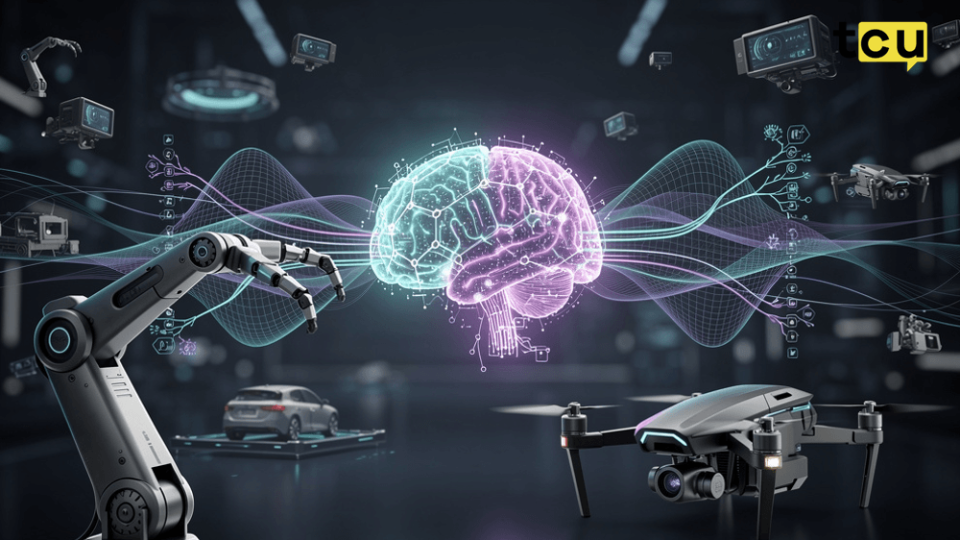

peaq and Allora have integrated their tech. Machines running peaqOS can now tap into Allora’s predictive AI forecasts when making decisions. That’s the headline. The deeper part is that machines don’t just consume forecasts. They can also become inference workers and earn from supplying predictions back to the network.
This isn’t a simple API call. Allora is a decentralized AI network. Many models compete to answer questions about the future. The network evaluates those answers against actual events. Then it ranks which models produce more accurate results. The system already includes more than 288,000 worker models and 55 live topics. That scale matters because the forecasts need to be useful in real time.
A machine can use forecasts and provide them
peaq’s role is to provide the underlying platform for connected machines. Through peaqOS, machines can access Allora via robotic.sh. Their activity stays linked to a single machine identity. That same identity covers two actions: using forecasts and registering as an inference worker.
What does that look like in practice? The companies demonstrated it with a Unitree G1 humanoid robot. After the robot finishes a warehouse shift, it can use an Allora forecast to decide when to convert its earnings. Maybe it waits for a better price. Maybe not. The forecast gives it a frame for the choice.
When the robot is idle, its computing resources can switch over to generating predictions for the network. So the same machine that consumes intelligence can also produce it. That’s the part I find interesting. It turns a machine into something closer to a participant in the AI network, not just a user.
How the service is available
The Allora service is now live through robotic.sh for machines running peaqOS. There’s no word yet on how many machines will actually use it, or what the earnings potential looks like for inference workers. Those details will probably become clearer as the network grows.
The broader direction is obvious. As more devices connect and automate decisions, they need reliable predictions about prices, demand, timing, and so on. A decentralized network of models can offer those predictions without relying on one central provider. But it’s early. The integration works, but whether machines will meaningfully participate as workers is still an open question.