
A Weekly Auction Built on Actual Use
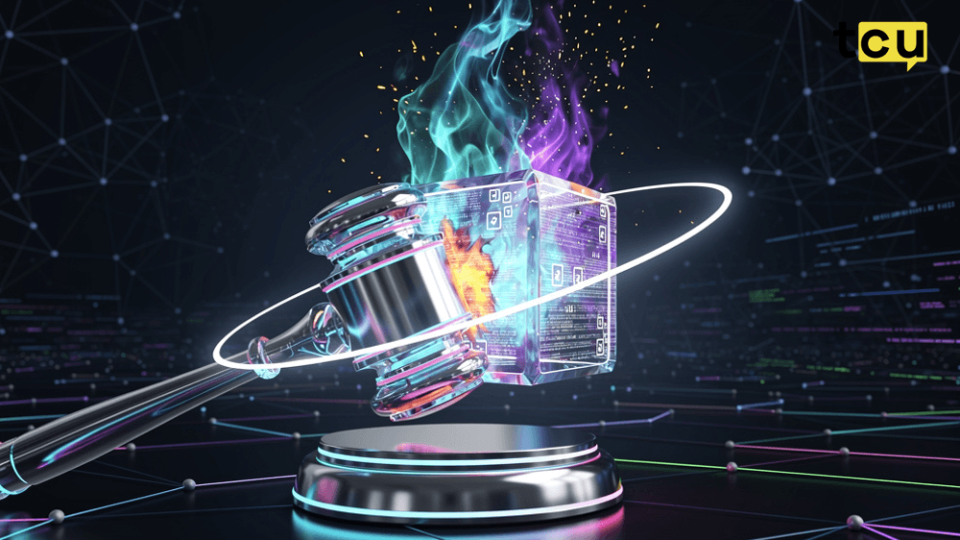
Injective’s burn auction is not some abstract token mechanic. It starts with fees. Every week, a share of the fees generated by apps on the network gets bundled into a basket. That basket is then auctioned off, and bids must be made in INJ. The winning bid is destroyed permanently. Nothing gets burned unless there is real network activity behind it.
The process launched in December 2021. The first round removed 40,000 INJ from supply. Since then, the auction has run every week. Because everything happens onchain, anyone can check the bids, the basket contents, and the final burn.
How Bidding Works
Each auction follows a simple pattern: the network collects fees, forms a basket, and opens a first-price bidding window. Participants put up INJ, and the highest bid wins. There can be an arbitrage angle here. If the basket is worth more than the winning bid, the buyer gets a deal. That possibility is part of what keeps people coming back week after week.
The mechanism has been updated over time. Injective’s token model moved through INJ 2.0 and INJ 3.0, and those upgrades changed how fees flow into the auction and how burns are tracked.
The Supply Squeeze and Community BuyBack
In November 2025, governance proposal IIP-617 passed with 99.96% approval. It introduced the Community BuyBack, which runs monthly and works separately from the weekly auction. Users commit INJ, receive a pro-rata share of network revenue, and their committed INJ is burned. The Supply Squeeze framework connects that monthly process to the weekly auction, so both burn mechanisms move together with network revenue.
The results have added up. By mid-2026, cumulative burns across both programs had reached roughly 7.19 million INJ. The August 2026 buyback round alone targeted more than 33,000 INJ. Crypto analyst @nazarr_0x noted on August 16, 2026, that Community BuyBack participants had earned average returns above 20%, calling it one of the more overlooked opportunities tied to INJ’s tokenomics.
What It Means for Holders
As of August 26, 2026, INJ traded near $5.52, with circulating supply close to its 100 million total supply cap, according to Coingecko data. The burn auction and the monthly buyback are usage-driven. When the network does more, more INJ gets removed. When activity slows, the burn slows too. That direct link between usage and supply reduction is what makes the mechanism worth paying attention to.