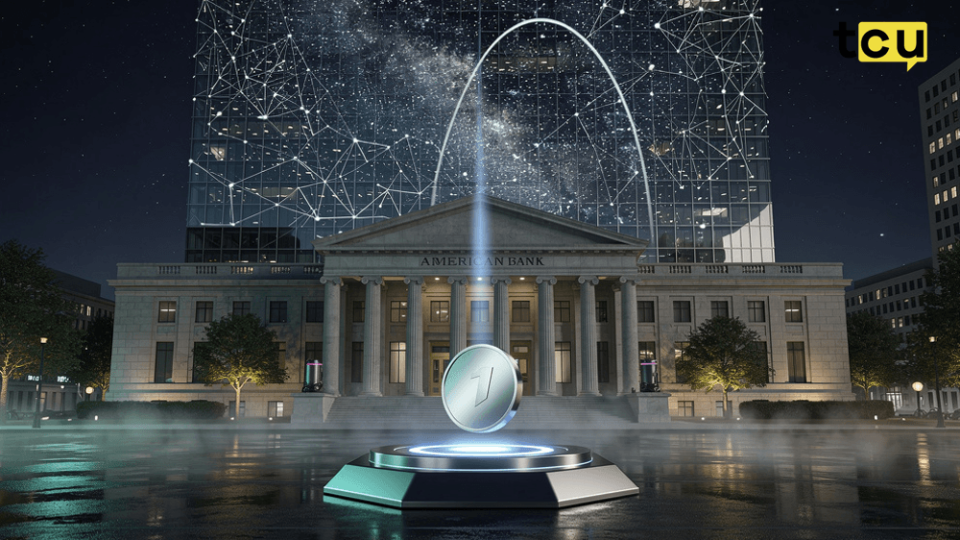

U.S. Bank has completed the first live pilot of its USBDC stablecoin, moving real money between its U.S. and European branches over the public Stellar network. The test was not a simulation. The bank said the transfers settled. It also chose not to build a private ledger, a decision that sets it apart from many large financial firms.
Why the pilot matters
Banks usually avoid open blockchains. Rules around money movement are tight, and public rails can look risky to compliance teams. U.S. Bank tried to answer that concern with technology. Jamie Walker, the bank’s head of digital assets, said its system is tied into the bank’s internal risk management.
The USBDC code includes freeze and clawback functions. If a payment goes to the wrong address, or if financial intelligence authorities flag it, the bank can freeze or return the funds with a single click. That control matters. Without it, a regulated bank would have little reason to use a public chain for cross-border cash.
Stellar Development Foundation CEO Denelle Dixon called the launch a major precedent. She said the live pilot shows real institutional adoption, with regulated firms using Stellar’s speed and open design for compliant settlements. U.S. Bank CEO Gunjan Kedia confirmed the pilot worked. She said the technology could let the bank move capital between continents around the clock at almost no cost, bypassing traditional intermediaries and long interbank reconciliations.
At first, USBDC will stay a closed instrument. It will be used only for the bank’s internal settlements and treasury operations.
Stellar’s role and on-chain data
Stellar was picked because its infrastructure is already in place. Data from RWA.xyz shows the network holds $3.32 billion in real-world assets. Retail users mostly know Stellar through USDC, which has 685,000 holders. U.S. Bank is taking a different path, closer to funds such as Spiko and Figure’s YLDS token.
This is not a system for everyone. It may have only a handful of wallets belonging to the bank’s own divisions. But billions of dollars in transactions could flow through them. That mix of limited access and large volume is the point. The bank gets public-chain speed while keeping control over who can use the token.
Competitive timing
U.S. Bank may have beaten rivals to the punch. A group of two dozen other major banks, including Goldman Sachs, has promised a shared interbank token by 2027. The fifth-largest U.S. bank has already tested a working solution on a public blockchain.
Questions remain. Regulators may still want more oversight. Other banks may wait to see how the next phase unfolds. And it is not clear whether USBDC will ever open beyond internal use. Still, the pilot gives a rare look at how a large bank can use open rails without giving up the controls that keep supervisors comfortable.