
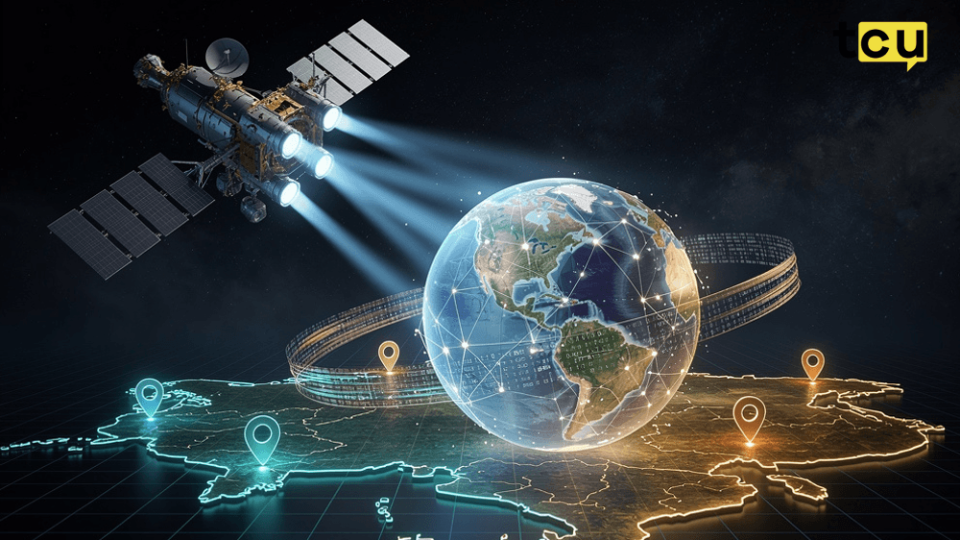

The Problem with Location Data
Geospatial data matters in many fields. In climate science, accurate historical observations are critical for modeling and predictions. In conflict zones, reliable location data can serve as evidence. In agriculture, farmers and analysts use it to plan crop planting and resource allocation. But conventional systems rely on centralized databases or trusted intermediaries, which creates vulnerabilities. Information can be distorted, dates can be faked, and the original source is not always clear. The implications are serious: inaccurate data can lead to flawed reporting or poor yield predictions.
Filecoin’s Role in Data Verification
Filecoin is a decentralized storage network that stores files with built-in cryptographic proofs. Data is not kept by a single authority but spread across many nodes. Each piece of data comes with mechanisms that confirm its existence and integrity over time. In this collaboration, the University of Maryland stores its geospatial data on Filecoin. Metadata records the time and location of each observation. Once written, these records cannot be altered. This allows anyone to verify a dataset without depending on a central entity.
Academic Collaboration with Real-World Impact
The University of Maryland is showing how researchers can use Filecoin to create a trusted archive of geospatial data. The approach integrates provenance directly into the storage layer. Researchers can share datasets with greater confidence, knowing that the data can be verified by other institutions, policymakers, and organizations. This reduces the risk of manipulation and builds a stronger foundation for scientific work.
Key Use Cases Across Industries
This project has implications beyond academia. In conflict documentation, immutable records could be used as evidence in investigations. Climate science can rely on long-term authenticated datasets for modeling and predictions. Agriculture benefits from verifiable location insights that improve decision-making. Supply chain management can use the same model to trace goods and verify their origins. Provenance becomes a built-in property, not an added feature.
Building Trust Through Decentralization
The core idea is trust without a central authority. Instead of relying on middlemen, the system uses decentralized infrastructure to ensure data integrity. This aligns with the broader move toward Web3 technologies where transparency and verifiability are priorities. The collaboration shows how decentralized networks can go beyond finance and support real-world data systems.
The partnership between Filecoin and the University of Maryland is tackling one of the most stubborn issues in data science: trust. By embedding cryptographic proof into geospatial datasets, the initiative enables data to be validated, shared, and trusted without doubt. As industries become more dependent on accurate location data, solutions like this may help set new standards for data integrity.